
March 3rd is Hinamatsuri, one of Japan’s most visually striking traditions. Known in English as Girls’ Day or Dolls’ Day, it’s a celebration of daughters — wishing them health, happiness, and a good future.
If you’ve seen photos of tiered platforms covered in ornate dolls dressed in Heian-period court costumes, that’s Hinamatsuri.
What Is Hinamatsuri?
Hinamatsuri falls on March 3rd every year. It’s also called Momo no Sekku (Peach Festival) because peach blossoms traditionally bloom around this time.
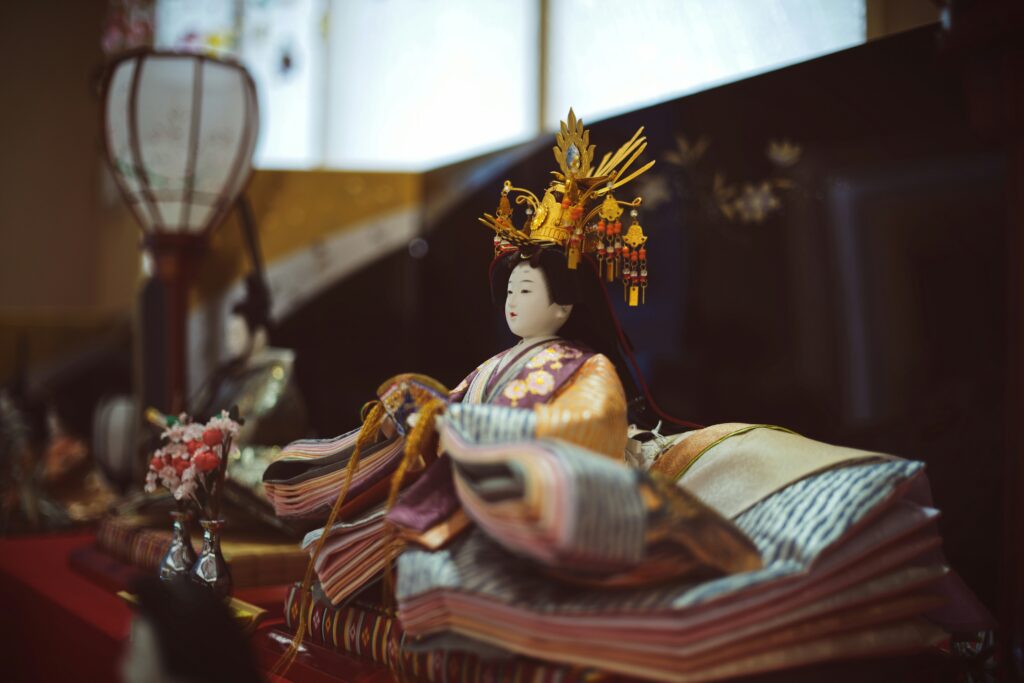
The celebration centres on displaying hina dolls — elaborate figures representing the imperial court. Families with daughters set up these displays at home, offer special foods, and pray for their girls’ wellbeing.
It’s not a national holiday, but it’s widely observed across Japan. If you visit Japan in late February or early March, you’ll see hina doll displays in department stores, hotels, and public spaces.
The History Behind Hinamatsuri
Hinamatsuri traces back to the Heian period (794–1185).
The original custom was called hina-nagashi — floating dolls down a river. People made simple dolls from paper or straw, transferred their misfortunes onto them, and set them adrift. The dolls were believed to carry away bad luck and evil spirits.
By the Edo period, this evolved into displaying dolls indoors rather than floating them away. The dolls became increasingly elaborate, and Hinamatsuri became an occasion for families to celebrate their daughters.
The tradition of setting paper dolls afloat still exists in some parts of Japan today.
The Hina Dolls: What Each Tier Represents
A full hina display has seven tiers, each with specific figures. The dolls wear costumes from the Heian imperial court.
Top tier: The Emperor and Empress (Odairi-sama and Ohina-sama) The most important pair sits at the top, in front of a gold folding screen with lanterns on either side.
Second tier: Three Court Ladies (San-nin Kanjo) Female attendants who serve sake to the imperial couple.
Third tier: Five Musicians (Go-nin Bayashi) Male court musicians, each holding a different instrument.
Fourth tier: Two Ministers (Zuishin) The Minister of the Left and Minister of the Right, who guard the emperor.
Fifth tier: Three Servants (Shicho) Attendants who handle various household duties.
The lower tiers display furniture, carriages, and other items from court life.
A full seven-tier set costs between $1,500 and $2,500, so many families opt for simpler displays with just the emperor and empress. These dolls are often passed down through generations as family heirlooms.
The “late marriage” superstition There’s a saying that if you don’t put the dolls away promptly after March 3rd, the daughter will marry late. It’s just superstition, but plenty of families still take it seriously.
Traditional Hinamatsuri Foods
Hinamatsuri has its own set of traditional foods. The colours pink, white, and green dominate — representing spring.
Chirashizushi (Scattered Sushi)
Chirashizushi is the signature dish of Hinamatsuri — vinegared rice topped with sashimi, egg, lotus root, prawns, and other ingredients.
Interestingly, chirashizushi itself doesn’t have a specific Hinamatsuri origin. Japanese people have long eaten sushi for celebrations — the characters for sushi (寿司) contain “kotobuki” (寿), meaning congratulations or longevity.
Chirashizushi became the Hinamatsuri standard because it’s festive-looking, can be made in large quantities, and uses ingredients with auspicious meanings. This tradition only became widespread from the Taisho period (1912–1926) onwards.
The ingredients each carry meaning:
- Prawns: Long life (the curved back resembles an elderly person)
- Lotus root: Ability to see the future clearly (because of the holes)
- Egg: Gold and silver, representing wealth
- Beans: Diligence and good health
Hina-arare
Small, colourful rice crackers in pink, green, yellow, and white. The four colours represent the four seasons, expressing a wish for the daughter’s happiness throughout the year. Depending on the region, they’re either sweet or soy-sauce flavoured.
Hishimochi
Diamond-shaped rice cakes in three layers: pink (protection from evil), white (purity), and green (health). The layered colours also represent a spring landscape — snow melting to reveal new green shoots under peach blossoms.
Hamaguri Clam Soup
Clear soup with clams still in their shells. Clam shells only fit perfectly with their original pair — no other shell will match. This symbolises finding a compatible partner and a harmonious marriage.
Amazake
A sweet, fermented rice drink. Traditionally, families drank shirozake (white sake), but since that contains alcohol, modern celebrations usually substitute amazake, which children can drink.
Experiencing Hinamatsuri in London
Hinamatsuri isn’t widely celebrated in the UK, but you can still get a taste of it.
Buy Hinamatsuri Sweets at Rice Wine Shop
Rice Wine Shop in Soho stocks seasonal Hinamatsuri treats around late February and early March:
- Sakura Mochi — pink rice cakes wrapped in cherry blossom leaves
- Three-colour Dango — skewered dumplings in pink, white, and green
- Aka Daifuku — red rice cakes filled with sweet bean paste
These are the real thing, perfect for celebrating at home.
Check Japan Centre
Japan Centre sometimes stocks seasonal items like hina-arare and sakura mochi around this time of year. Worth checking their shelves in late February.
Eat Chirashizushi
Several Japanese restaurants in London serve chirashizushi year-round. Eating it around March 3rd puts you in the Hinamatsuri spirit.
Make It at Home
Chirashizushi is surprisingly doable at home. Pick up sushi rice and toppings from Japan Centre or Rice Wine Shop, and put together your own. It doesn’t have to be perfect — the point is celebrating.
Why Hinamatsuri Matters
Hinamatsuri is more than dolls and pretty food. It’s a tradition where families express hope for their daughters’ futures — health, happiness, and finding a good partner.
The elaborate dolls, the carefully chosen foods, the superstitions about putting things away on time — it all reflects how seriously Japanese culture takes these wishes.
March 3rd might pass unnoticed in London, but now you know what millions of families across Japan are celebrating.
Written by Ayaka Uchida — CEO of A-Digital Works, founder of Nihon GO! World.