
In the UK, Valentine’s Day means flowers and cards. Men give to women.
Japan does it the other way around. Women give chocolate to men — not just romantic partners, but colleagues, bosses, friends, and family too. What started as a confectionery company’s marketing campaign in the 1950s has become a national event.
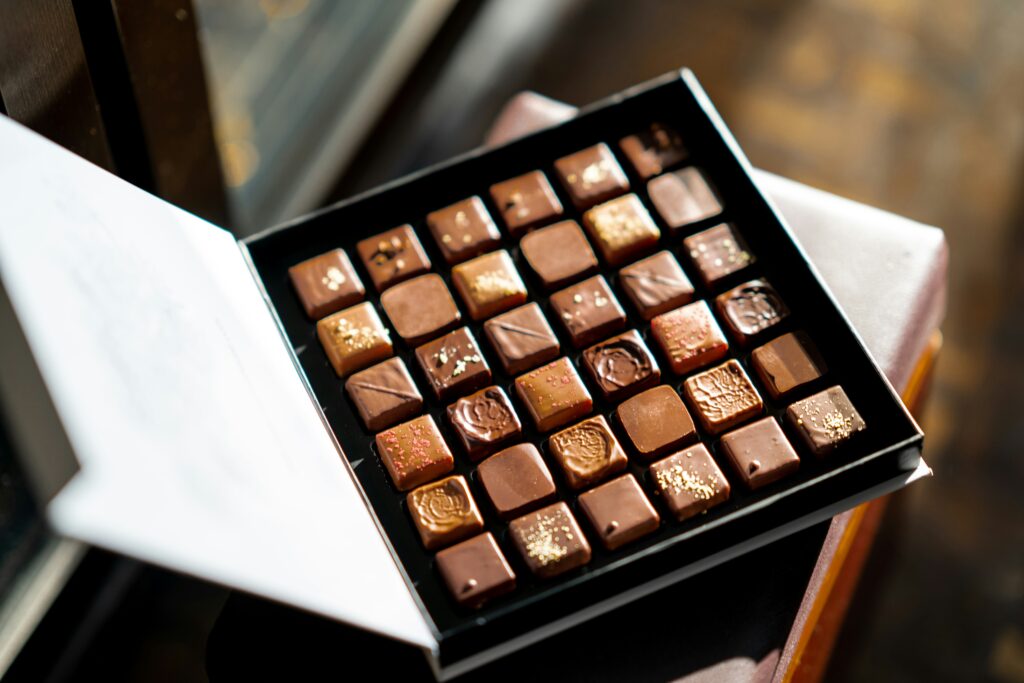
Types of Chocolate
In Japan, the chocolate you give has a different name depending on who it’s for.
Honmei Choco (本命チョコ) “True feelings” chocolate. This is for someone you actually like. High-end brands or handmade are the standard. You put time and money into it because it matters. Sometimes it doubles as a confession.
Giri Choco (義理チョコ) “Obligation” chocolate. This goes to coworkers and bosses — social duty, not romance. You deliberately pick something inexpensive to make clear it’s not honmei.
In the past, it was an unspoken rule for female employees to give giri choco to every man in the department. These days, some companies have banned it outright. It costs money, takes effort, and creates awkwardness for everyone involved.
Tomo Choco (友チョコ) “Friend” chocolate. Exchanged between friends, especially popular among teenage girls. Homemade and swapped in groups is the classic approach.
Jibun Choco (自分チョコ) “Self” chocolate. Fancy chocolate you buy as a treat for yourself. A relatively new trend born from the honest thought: “I’d rather eat it myself than give it away.” Department stores now target this market with luxury options.
White Day: The Return Gift
March 14th is White Day. Men who received chocolate on Valentine’s Day give something back.
The key rule: return at least double or triple the value of what you received. A cheap return gift signals “not interested.”
White Day also started as a marketing invention — it became established in the 1980s and is now inseparable from Valentine’s Day in Japan.
Handmade vs Store-Bought
In Japan, handmade honmei chocolate is often seen as more heartfelt than something you bought.
Before Valentine’s Day, supermarkets and 100-yen shops set up baking sections with chocolate, moulds, and wrapping materials. Looking up recipes on YouTube or Cookpad and spending the weekend in the kitchen is a seasonal ritual.
That said, “handmade = too intense” is also a thing now. Depending on the relationship, a well-chosen brand chocolate might be better received.
Valentine’s Fairs in Japan
Visit a Japanese department store in February and the basement food floor transforms into a chocolate wonderland.
Chocolatiers from Japan and abroad set up pop-up shops selling Valentine’s-only products. You can sample before you buy. The famous ones have queues.
Valentine’s fairs at Isetan Shinjuku, Hankyu Umeda, and Takashimaya make the news every year.
Where to Buy Japanese Chocolate in London
If you want to try Japanese chocolate:
- Rice Wine Shop (Soho) — Small but has Japanese sweets
- Japan Centre (Piccadilly) — Largest selection, including limited Kit Kat flavours
- Waso (Online) — Free UK-wide delivery
For more details, see our guide to Japanese supermarkets in London.
The Bigger Picture
Japanese Valentine’s Day isn’t just about romance. It’s a social ritual played out through chocolate — workplace relationships, friendships, self-care, all wrapped up in confectionery.
The giri choco culture has its critics, but that’s part of what makes it distinctly Japanese. Harmony over efficiency. The group over the individual. A lot of Japanese society becomes visible through a single box of chocolates.
Written by Ayaka Uchida — CEO of A-Digital Works, founder of Nihon GO! World.